Why Mercedes Chose RISE with SAP for AI Transformation

Modern vehicles now depend more on software than mechanical engineering, with over-the-air updates, predictive maintenance and AI-powered features defining customer experiences. For established manufacturers, this shift demands completely rethinking how they build and manage technology.
Behind the polished metal and leather of every Mercedes-Benz sits a digital problem that highlights this challenge: 10,000 separate software applications, many dating back decades.
Katrin Lehmann, Chief Information Officer of Mercedes-Benz Group, inherited this challenge when she took charge of the German automaker’s technology strategy in April 2024. Speaking at SAP’s Sapphire conference in Orlando, she explained what the company was up against.

The sprawling application portfolio represented years of piecemeal IT decisions, each solving immediate problems whilst creating long-term headaches. With the automotive industry shifting towards software-driven features and AI-powered systems, Mercedes could no longer afford the burden of fragmented digital infrastructure.
RISE with SAP helping Mercedes-Benz tackle legacy systems
Rather than attempting a wholesale replacement of its technology stack, Katrin’s team took a calculated approach. They deployed specialised mapping software to dissect the entire IT landscape, identifying which systems delivered value and which simply consumed resources.
“We took the time to apply a methodology – transform, invest, migrate, eliminate – to plan where we need to go,” Katrin explains.
Much of Mercedes’ critical infrastructure ran on SAP’s older ECC software, powerful but locked into on-premise data centres that couldn’t deliver the real-time responses modern cars demand.
The mapping exercise prevented what could have been a catastrophic rip-and-replace project. Instead, Mercedes identified its most crucial systems for priority treatment. “We took the most important systems, and those are the ones we are migrating to RISE with SAP right now,” she says.
This backend transformation enables the features that differentiate Mercedes vehicles in showrooms. Over-the-air updates that add functionality overnight, predictive maintenance systems that prevent roadside breakdowns and seamless connectivity all depend on fast, reliable data processing that the old systems couldn’t deliver.
Thomas Saueressig, a member of SAP’s Executive Board and who leads SAP Product Engineering, recognises the magnitude of Mercedes’ commitment. “Mercedes-Benz is an outstanding example of how a clear cloud strategy not only optimises IT infrastructure but also drives comprehensive business transformation and serves as a foundation for innovation,” he wrote on LinkedIn.
"With our Business Transformation Management approach, embedded AI and our intelligent co-pilot Joule, we're helping to reduce complexity, ease the burden on business users and accelerate digital transformation."
Mercedes-Benz engineers unleash AI across global operations
Mercedes’ engineering culture, rooted in automotive innovation, drives aggressive AI experimentation. The company invented the automobile in 1886, and that legacy creates expectations among its technical workforce.
“We are the inventors of the car, so we have lots of very talented and curious engineers in the organisation,” Katrin says. “And they’re always looking at me like, ‘Okay, what can I do with AI?’”
The answer, it turns out, is quite a lot.
AI is already being woven into the fabric of the Mercedes-Benz experience. The ‘Hey, Mercedes’ voice assistant operates in current vehicle models, providing natural language interaction for drivers. The system handles requests for navigation, climate control and entertainment functions through voice commands.
In 2023, Mercedes‑Benz was one of the first automakers to introduce ChatGPT as a US-beta program and last year said it was bringing this functionality into series-production vehicles for the first time.
Mercedes software teams also use GitHub Copilot for code development, which generates programming suggestions and automates routine coding tasks, reducing development time for internal applications.
On factory floors, Mercedes also operates a proprietary generative AI system that connects manufacturing workers across different production sites. The tool processes natural language queries about quality issues and production problems.
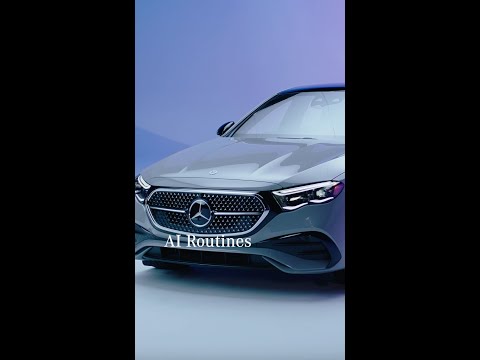
“If a quality issue arises, a worker in another plant can, by natural language, talk to our internal Mercedes-Benz GPT… about quality problems and solve them directly,” Katrin explains. The AI accesses historical quality data and manufacturing documentation to provide immediate responses to worker queries.
“RISE with SAP provides access to continuous innovations in the cloud, specifically in AI,” Thomas emphasises. “This ensures the company remains at the forefront with agile solutions, even in times of change. We are proud to accompany Mercedes-Benz on this crucial journey.”