
Why Nissan is Embracing Arkestro's Predictive Procurement
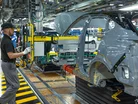
The automotive sector is witnessing a technological revolution as enterprises integrate AI and predictive analytics into their operational frameworks, with procurement emerging as a critical area for digital transformation.
As organisations seek competitive advantages through technological innovation, the automotive industry is turning to AI-powered platforms to address supply chain vulnerabilities and enhance operational efficiency.
Nissan has partnered with Arkestro to deploy advanced procurement technology across its North American operations, signalling a broader industry shift towards intelligent automation.

Global supply chains have experienced unprecedented disruption in the last few years, forcing enterprises to reconsider their operational models.
The focus has shifted from pure efficiency to building resilient systems capable of withstanding market volatility. Traditional procurement methods struggle to meet these demands, creating opportunities for AI and machine learning applications to fill the gap.
Arkestro operates a predictive procurement platform that could transform how organisations manage supplier relationships and sourcing activities.
The technology combines AI with game theory, supported by three patented frameworks: Negotiation Science, Supplier Science and Process Science. These systems work together to convert reactive procurement processes into proactive, data-driven operations.
Nissan Americas is implementing this platform across teams in the US, Canada and Mexico. The deployment covers both indirect and direct spend categories, aiming to improve data visibility, accelerate sourcing cycles and create more competitive procurement environments.
AI-powered supply chain management
According to S&P Global, the automotive sector is experiencing fundamental transformation driven by technological change.
Many automotive manufacturers rely on just-in-time (JIT) manufacturing systems, where components arrive precisely when needed to reduce inventory costs. This model depends on accurate demand forecasting and reliable supplier networks, making it vulnerable to disruption.
Incidents in 2025, including the cyber attack on JLR, have exposed weaknesses in JIT systems. These events are prompting manufacturers to explore hybrid approaches that combine lean inventory management with strategic stockpiling of critical components.
Advanced analytics and predictive technologies are becoming essential tools for managing this complexity.
Traditional procurement strategies often struggle with data access, processing speed and event management. Arkestro's platform addresses these limitations through automation and game-theoretic algorithms that could streamline sourcing workflows.
The technology aims to reduce average event cycle times and lower costs whilst maintaining quality standards.
"We are pleased to work with Nissan as it explores new tools to support its procurement transformation efforts," says Rob DeSantis, CEO and co-founder of Arkestro. "Our platform is built to help organisations create more efficient, transparent and resilient sourcing processes."
Predictive analytics and risk mitigation
Arkestro's predictive capabilities could offer significant advantages in risk management.
By analysing supplier data and market conditions, the AI-powered system can identify vulnerable suppliers before disruptions occur. This early warning functionality enables procurement teams to source alternative suppliers quickly, potentially reducing exposure to supply chain interruptions.
For automotive manufacturers operating in volatile markets, these technological capabilities could prove crucial.
Nissan's implementation spans multiple categories of spend, allowing teams to apply consistent processes whilst gaining transparency across supplier interactions. The technology aims to free procurement professionals from time-intensive sourcing activities, enabling them to focus on strategic priorities.
Arkestro's approach represents a broader trend within enterprise technology, where AI and machine learning are being applied to operational challenges.
The automotive industry faces particular pressure due to fragmented global supply chains and increasing geopolitical uncertainty. Technologies that can process large datasets, predict outcomes and automate routine tasks could provide competitive advantages in this environment.
The partnership between Nissan and Arkestro demonstrates how established manufacturers are adopting emerging technologies to maintain operational resilience.
As AI capabilities continue to advance, procurement platforms could become increasingly sophisticated, offering deeper insights and more automated decision-making processes. This technological evolution could reshape how automotive companies manage their supply chains and supplier relationships in an increasingly complex global marketplace.

Executives

Robert DeSantis
Co-Founder & CEO