
Silicon Valley Giants Join Trump for Historic China Summit
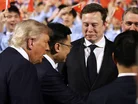
The current US presidential visit to Beijing signals a clear signal that China is ready to re-engage with the global market.
President Donald Trump has arrived in the Chinese capital flanked by a who’s who of American innovation.
Among the delegation are Apple CEO Tim Cook, Tesla’s Elon Musk, and – in a last-minute surprise addition that has sent shockwaves through the semiconductor industry – NVIDIA’s Jensen Huang.
The atmosphere at the state banquet was one of strategic alignment.
President Xi Jinping described the occasion as a “historic visit” where “the great rejuvenation of the Chinese nation” and “Make America great again” can find common ground.
Behind the smiles, the struggle for power continues.
As noted in recent BBC reporting, “Xi will believe he has shown the US and the world just how dependent they are on Chinese manufacturing and technology”.
The battle for new productive forces
President Jinping is currently doubling down on a policy he calls “new productive forces”.
This isn’t just political rhetoric – it is a massive state-led pivot toward high-end manufacturing, renewable energy and, most crucially, AI.
Nowhere is this ambition more visible than in Chongqing.
Once a traditional industrial hub, billions in state funding have transformed it into a sprawling “8D” megacity.
For tech enthusiasts, Chongqing is the laboratory for China’s future: a vertical city of skyscrapers where the state aims to build the Silicon Valley of the East.
However, the hardware required to run this revolution is still largely American.
While China has the world’s highest density of industrial robots, the brains behind them – the high-end AI chips – are where the dependency lies.
NVIDIA’s high-stakes return
The presence of Jensen is perhaps the most significant subtext of the trip.
After years of the Biden administration’s chip wars, which crippled China’s access to advanced semiconductors, the tide is turning.
The Trump administration recently shifted from a presumption of denial to a case-by-case review for chip exports.
This has cleared the path for NVIDIA to begin shipping its H200 AI chips to Chinese giants like Alibaba and Tencent.
While these aren’t the absolute cutting-edge Blackwell chips reserved for US domestic use, the H200 is still roughly six times more powerful than anything China can currently produce at home.

Apple and Tesla
While Jensen is there to sell AI chips, Tim Cook and Elon Musk are there to secure the future of Apple and Tesla.
Despite moving some production to India, Tim is navigating a delicate balance.
The iPhone 17 has been a massive hit in the Chinese market and maintaining a frictionless relationship with Beijing is vital for Apple’s supply chain stability.
For Elon, China remains both a primary manufacturing base and a critical market for full self-driving expansion.
The mission for these leaders seems to be to remove the regulatory hurdles that have stifled American business growth within the mainland.
The economic reality
In recent years, US-China trade has shifted significantly, with American imports from China dropping by 20%.
As the US falls to China’s third-largest trading partner – slipping behind Southeast Asia and the EU, reports the BBC – this delegation represents a desperate, high-tech reset.
If Trump can leverage the expertise of tech leaders to open doors, we may be looking at a new chapter of transactional tech where American silicon powers the very Chinese robotics revolution that once threatened to outpace it.