This Week’s Top Five Stories in Technology

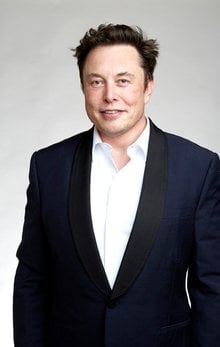
Why X and Elon Musk Climbed Down from Grok Deepfake Stance
Elon Musk’s X has introduced major restrictions on its Grok AI tool following mounting criticism over its potential to generate sexualised images of real people.
The company stated that, in regions where such activity is illegal, Grok will no longer be allowed to modify photos of individuals to show them in revealing clothing.
“We have implemented technological measures to prevent the Grok account from allowing the editing of images of real people in revealing clothing,” an announcement on X says.
The decision comes after global backlash over users producing sexualised AI deepfakes – some involving women and children – and sharing them widely across the platform.
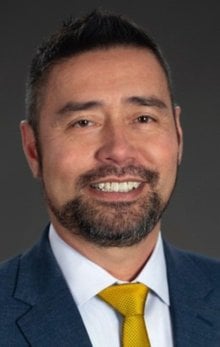
Q&A: UST’s Heather Dawe on Building Responsible AI at Scale
AI, digital transformation and economic resilience are some of the hottest topics across the tech space.
Exploring how technology and responsible AI can drive sustainable value for both business and society is Heather Dawe, Chief Data Scientist, UK and Head of Responsible AI at UST.
UST is an AI and digital transformation company with more than 30,000 employees. Its teams around the world are working with many of the globe’s largest companies to guide and implement their AI and associated digital transformation.
With more than 25 years of experience spanning government, the public sector and industry, Heather is a recognised thought leader in applied data and AI ethics.
A frequent voice in national and international media outlets, she advocates for human‑centred innovation that balances progress with accountability.
In this Q&A with Technology Magazine, Heather discusses UST’s role in shaping ethical AI practices, the implications of emerging technologies and how organisations can prepare for an AI‑driven future.
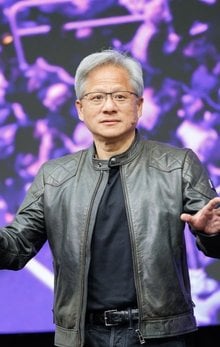
NVIDIA and Caterpillar Deploy Physical AI in Manufacturing
NVIDIA and Caterpillar are expanding a collaboration centred on physical AI to transform manufacturing systems across industrial sectors.
The partnership focuses on deploying advanced computing infrastructure across construction, mining and power equipment facilities worldwide.
By integrating digital twin technology with edge computing capabilities, the companies aim to create factory systems that process sensor data locally while supporting autonomous operations at scale.
Joe Creed, CEO of Caterpillar, says: "As AI moves beyond data to reshape the physical world, it is unlocking new opportunities for innovation.

"Caterpillar is committed to solving our customers' toughest challenges by leading with advanced technology in our machines and every aspect of business."
The collaboration addresses critical challenges in industrial manufacturing, including connectivity limitations in remote environments, workforce skills gaps and the need for resilient supply chain operations.
Through the integration of NVIDIA's computing platforms with Caterpillar's industrial expertise, the partnership creates an ecosystem that spans jobsites, production facilities and global supply networks.
AI-Powered Humanoid Robots Transform SAP Warehouse Pilot
The convergence of artificial intelligence and robotics is moving beyond theory and into practical warehouse applications.
This is epitomised by a pilot programme bringing together enterprise software giant SAP and refrigeration manufacturer BITZER.
The collaboration centres on SAP's Project Embodied AI initiative, which combines AI systems with physical robotics to create autonomous machines capable of operating in real-world environments.
By integrating these robots with SAP Business AI, the technology could enable machines to make cognitive decisions based on real-time operational data, potentially transforming how warehouses function.
How Apple Robots are Closing the Waste Recycling Loop
Apple has a workforce of more than 166,000 – but have you heard of its robot team member, Daisy?
Daisy lives in a warehouse in Austin, Texas and, with the precision of a surgeon, takes a battered old iPhone, freezes its battery with a blast of -80°C air and punches out the screws.
Within just 11 seconds, what was once a piece of electronic waste is now a tidy collection of high-quality components, ready for a new lease of life.
But Daisy is not the only robot member of Apple’s workforce with waste reduction as its number one focus.
She is the matriarch of a growing robotic workforce that includes Dave and Taz – machines designed by Apple to solve one of the tech industry’s most expensive and environmentally damaging problems: the graveyard of old devices.







Executives
Elon Musk
Tesla CEO
Heather Dawe
Chief Data Scientist, UK and Head of Responsible AI
Jensen Huang
Founder and CEO
Joe Creed
Chief Executive Officer