Why is Apple Moving its iPhone Production to India?
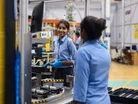
With geopolitical tensions between the US and China heightening and the uncertainty around the tariff war shaking the economy up, major companies have taken it upon themselves to diversify their supply chain.
Leading this change was Apple, setting eyes on another destination with low cost labour and manufacturing – India.
In 2025, Apple passed a huge milestone as cumulative exports of iPhones assembled in India under the government’s Production Linked Incentive (PLI) scheme surpassed US$50bn.
The PLI programme is part of Prime Minister Narendra Modi's 'Make in India' campaign and provides performance‑linked initiative to companies to manufacture products domestically and boost exports.

By the end of 2026, Apple plans to manufacture in India the majority of iPhones it sells in the US market
India becomes a critical manufacturing hub
India’s February 2026 budget granted a big win to Apple’s manufacturing goals, when it exempted electronic manufacturers from paying additional taxes for providing machinery to local manufacturers.
This five year tax holiday means that Apple can now offer expensive machines to its contract manufacturers Foxconn and Tata.
Apple's production in India has jumped up four times since 2022, such that one in every five iPhones sold in the world are made in India.
The remaining 75% of Apple’s iPhones are still manufactured in China, which has a strong manufacturing and supply chain base, but that could soon change.
“India is establishing itself as a critical hub for electronics manufacturing amid global companies diversifying away from traditional supply chains in China,” says Cristiano Amon, President and CEO at Qualcomm at the World Economic Forum in Davos.
Other electronic manufacturers like Samsung and Google are also ramping up manufacturing in India, turning the country’s standing as a low-cost assembly hub to an established manufacturing zone.
Apple’s Education Hub for supplier employees
Apple rolled out skill building and training programs in India to upskill the workforce across its supply chains that are still new to the game.
The first of its kind Apple Education Hub in Bengaluru will operate in collaboration with the Manipal Academy of Higher Education (MAHE) and is set to offer courses in March 2026.
Under this campaign, development courses will be offered to more than 25 of its suppliers including Tata Electronics, wherein employees can learn new skills ranging from Swift coding, robotics, automation technology and smart manufacturing.
This is part of Apple’s US$50m global Supplier Employee Development Fund.
“The same spirit of innovation that drives our products also guides our commitment to supporting people across our global supply chain,” says Sarah Chandler, Apple’s vice president of Environment and Supply Chain Innovation.
“We’re thrilled to expand our technical training courses in India, giving thousands of employees the opportunity to learn valuable new skills and explore new paths for career growth.”
The production of iPhones in India is still more expensive compared to China, with costs as high as 10% in some cases according to Reuters.
Being a much more novel industry, Indian electronics supply chains are still growing and haven't yet hardened compared to China’s, but the global trade wars and Covid uncertainties have put India on the manufacturing map and it looks like it is there to stay.


Executives
Cristiano R. Amon
President and Chief Executive Officer
Sarah Chandler