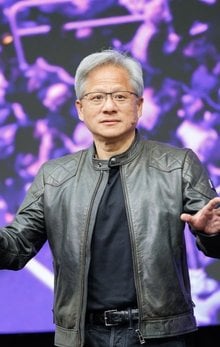
NVIDIA Powers the AI Boom With Six Tech Deals in South Korea
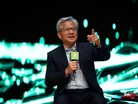
NVIDIA has secured South Korean supply agreements to address global demand for memory chips.
The move involves a multi-year technology partnership with SK hynix to develop advanced memory for data centres worldwide.
The company has also established technology partnerships with South Korean industrial groups including SK Telecom, Naver, Doosan, LG Group and Hyundai Motor.
Jensen Huang, CEO of NVIDIA, spent four days in Seoul to finalise the agreements covering advanced memory chips, gigawatt-scale data centres and autonomous mobility.
The financial terms of the deals have not been disclosed by NVIDIA and its partners.
Memory supply chain expands
The multi-year collaboration between SK hynix and NVIDIA addresses supply requirements as NVIDIA expands into robotics, personal computers and supercomputers. Memory chip makers are working to meet global demand.
Jensen spoke to Chey Tae-won, Chairman at SK Group. He said: “SK hynix has been NVIDIA’s largest memory partner. SK hynix will continue to be NVIDIA’s largest memory partner.”
The agreement with SK hynix runs for more than two years with the option to extend.
The company competes with Samsung Electronics and US-based Micron Technology.
“We already procure and we buy from SK hynix already billions and billions of dollars each year and it is going to grow substantially,” Jensen added.
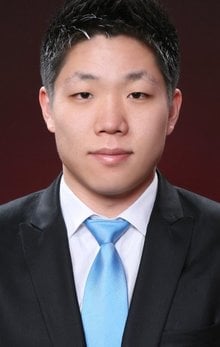
According to Young Ho Ryu, Senior Industry Analyst at NH Investment & Securities, the partnership reinforces the view that memory chips are evolving from a commodity product into a more customer-specific business.
Data centre infrastructure plans
The agreements with SK Telecom, Naver and Doosan will use NVIDIA technology to build data centres.
SK Telecom will build a gigawatt-scale AI cloud in South Korea with NVIDIA’s support. The first AI data centre is scheduled to come online in 2027.
NAVER and Doosan Group will also use NVIDIA technology to help build AI data centres.
Doosan Group develops robots and makes materials used in the Blackwell chips from NVIDIA. The company expects its energy solution to be used in the data centre platforms of NVIDIA and plans to use the physical AI technology of the US firm as well.
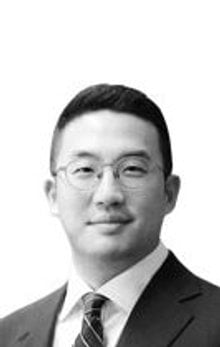
Following a meeting with Koo Kwang-mo, Chairman and CEO at LG Group, Jensen noted that NVIDIA is partnering with LG Group on electronics, mechanical systems and AI for humanoid robots.
He comments: “We are working with them in motor technology as well as mechanical systems so that we can bring together humanoid robotics and the future of robotics.”
Jensen notes that the pair are also working on the architecture of future data centres. This includes cooling, power delivery and the entire design and building of the facilities.
Strategic mobility partnerships deepen
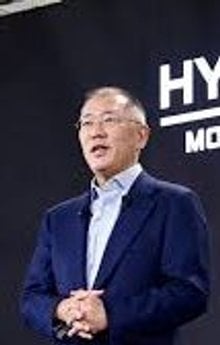
After meeting with Euisun Chung, Executive Chair at Hyundai Motor Group, NVIDIA revealed it is deepening its partnership with Hyundai across a range of AI initiatives. These include autonomous mobility, robotics and AI-powered manufacturing.

Highlighting the opportunities to accelerate the development of industrial robotics, Jensen says NVIDIA and Hyundai will work together to bring AI to all forms of mobility.
Referring to the planned AI data centre of Hyundai Motor Group in Saemangeum, he calls South Korea as an AI Valley akin to Silicon Valley in California. “I am very happy to build NVIDIA in Saemangeum,” he says.
Market volatility hits semiconductor stocks
South Korea is home to major producers of chips, electronics, cars and ships. SK hynix and Samsung Electronics are the two largest makers of memory chips in the world.
The Kospi index of the country doubled in six months as SK hynix and Samsung Electronics benefitted from demand for data centre components.
This index, however, closed 8.3% lower on Monday after robust US jobs data fanned bets on a Federal Reserve rate hike this year and sparked a rout in global tech stocks.
Samsung Electronics and SK hynix shares closed down 10.2% and 7.7% respectively.
When asked about the global chip stock rout, Jensen waved off concerns: “Everybody should be very excited; they can now buy stock at a cheaper price, and it is absolutely true that the future of AI is very bright.”






Executives
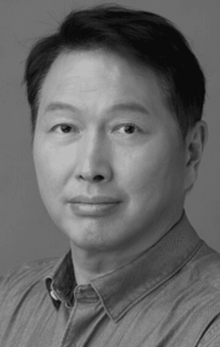
Chey Tae-won
Chairman
Euisun Chung
Executive Chair
Jensen Huang
Founder and CEO
Koo Kwang-mo
Chairman and CEO
Young Ho Ryu
Senior Industry Analyst