NVIDIA, Siemens & Schneider Showcase Industrial AI in Action
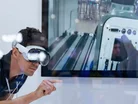
Hannover Messe 2026 has officially opened its doors this week.
This year, the conversation has moved past theoretical potential toward the tangible, measurable benefits of AI for the manufacturing sector.
With more than 3,000 exhibitors gathering in Germany, the world’s leading tech firms are demonstrating a unified front against modern industrial challenges.
The showcase focuses on the convergence of physical, generative and agentic AI, alongside robotics and digitalisation, to provide companies with a distinct competitive edge in an increasingly complex global market.
Siemens: Bridging the gap with physical AI
Siemens is utilising this year’s event to demonstrate how AI systems are evolving from advisory tools into active participants on the factory floor.
Through a flexible shoe production line, the industrial giant is showing how autonomous systems can move beyond making recommendations to taking direct action.
At the heart of this display is a collaboration between Siemens, NVIDIA and the robotics firm Humanoid.
The HMND 01 wheeled Alpha humanoid robot – built using the NVIDIA physical AI stack – has already moved out of the lab and into the real world, successfully performing autonomous logistics tasks at Siemens’ electronics factory in Erlangen, Germany.
“Factories of the future demand robots that can perceive, reason and adapt autonomously alongside human workers, tackling the labor shortages and operational complexity that traditional automation struggled to handle,” says Deepu Talla, Vice President of Robotics and Edge AI at NVIDIA.
“With Siemens providing the industrial integration backbone and Humanoid deploying NVIDIA’s full physical AI stack – from simulation-first training to real-time edge inference – this deployment paves the way for humanoid robots meeting real production targets on a live factory floor.”
The robot’s performance metrics are impressive, achieving a throughput of 60 tote moves per hour while picking and placing containers for human operators.
By leveraging the Siemens Xcelerator portfolio, the robot integrates seamlessly with existing machinery, creating a “simulation-first” environment that allows for rapid scaling and real-time edge inference.

Schneider Electric and Microsoft: The rise of agentic design
While Siemens masters the physical, Schneider Electric is focusing on the “brains” behind the operation.
Partnering with Microsoft, Schneider is demonstrating how agentic software is cutting engineering time by as much as 50%.
The Schneider Industrial Copilot, powered by Microsoft Azure AI, is already delivering significant ROI for early adopters like h2e POWER, an Indian green hydrogen supplier.
Key Outcomes for h2e POWER include 6,000 hours of stable autonomous operation, 10% reduction in the levelised cost of hydrogen and €500,000 ($588,000) in estimated savings.
“With Schneider Electric’s open, software‑defined automation and Microsoft’s AI capabilities powered by Azure, our systems are becoming smarter, more responsive, safer and dramatically more scalable,” notes Siddharth Mayur, Founder of h2e POWER.
“This open architecture also means we can redeploy intelligence across our entire installed base across multiple locations, without the lock‑in that has constrained industrial innovation for decades.”

Building an AI-ready foundation
For many manufacturers, the hurdle isn’t the AI itself, but the infrastructure required to run it. Schneider Electric is addressing this through partnerships with Dell Technologies and AWS.
Schneider and Dell are showcasing a comprehensive “future-ready foundation” that covers the entire lifecycle of an AI deployment, including:
- OT Groundwork: Reliable local systems powered by ProLeiT.
- Digital Twin Design: High-fidelity planning via AVEVA and NVIDIA Omniverse to lower deployment risk.
- Modular Infrastructure: Prefabricated data centers built on Dell solutions for rapid scaling.
Meanwhile, Schneider is demonstrating how its EcoStruxure Automation Expert runs on AWS.
By using Amazon EC2 for virtualised control and AWS IoT Greengrass at the edge, manufacturers can deploy automation consistently across distributed environments. This approach solves the persistent headache of managing heterogeneous hardware across multiple global sites.
Data control and competitiveness
As the lines between IT and OT continue to blur, the emphasis remains on efficiency and data sovereignty.
Bernd Wagner, CSO of Schwarz Digits (the IT division of Schwarz Group), summarises the sentiment echoing through the halls of Hannover Messe this week:
“Robust IT infrastructures are now the foundation of global competitiveness. We help industrial companies securely integrate cloud, AI and IT services into their processes to dramatically increase efficiency while keeping control over their own data.”
The overarching message from Hannover Messe 2026 suggests that pilot programmes for AI are ending and the age of the AI-integrated factory is now underway.
Company portals






Executives
Bernd (Bernie) Wagner
CSO Schwarz Digits
Deepu Talla
Vice President and General Manager - Robotics & Edge AI
Siddharth Mayur
Founder, Executive Director