Year in Review: Technology Magazine’s Top 10 Companies 2025

Technology now underpins nearly every aspect of modern life – from global communication and commerce to the rise of AI and digital innovation.
This year’s Top 100 Companies ranking from Technology Magazine highlights just how fast the tech world is evolving, with established giants competing with ambitious disruptors shaping the digital future.
Cloud computing, AI, semiconductors and consumer technology continue to converge, driving new waves of transformation and redefining how businesses and individuals interact with technology.
Sustainability, security and scalability are also vital pillars, as organisations strive to balance growth with responsibility in an increasingly connected world.
As Technology Magazine reflects on 2025, we spotlight the 10 leading innovators and industry powerhouses setting the pace for the rest of the decade.
10. SAP
Founded in 1972, SAP is a German multinational that has grown into the global leader in enterprise resource planning (ERP) software.
Its deeply integrated platforms for managing finance, supply chains and human resources are fundamental to the daily operations of many of the world’s largest and most complex organizations.
Today, the company’s core mission is to support these enterprises in their digital transformation journeys, enabling the seamless migration of critical business systems to the cloud.
9. Huawei
Huawei stands as the world’s largest manufacturer of telecommunications equipment and continues to play a pivotal role in the global 5G infrastructure landscape.
Despite enduring international sanctions, the company has channelled significant investment into building self-reliant ecosystems that safeguard its technological independence.
Central to this effort are its HiSilicon semiconductor designs and the HarmonyOS software platform, which together enable Huawei to sustain a robust presence in consumer electronics and remain a competitive force in the enterprise technology market worldwide.
8. AMD
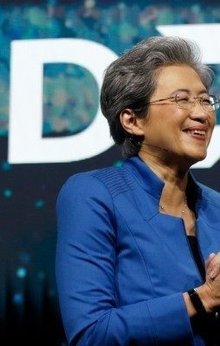
Established in 1969, AMD is a fabless semiconductor company that develops high-performance CPUs and GPUs while relying on external partners for manufacturing.
Its product lineup features Ryzen processors for consumers, Epyc chips for servers and Radeon graphics cards, positioning the company in direct competition with Intel and Nvidia.
Driven by its cutting-edge Zen architecture, AMD has gained substantial market share across both the personal computing and rapidly expanding data centre sectors in recent years.
7. Samsung Electronics
Samsung Electronics, the South Korean conglomerate, is a global powerhouse in consumer electronics and a key player in the semiconductor industry.
The company ranks among the top producers of critical memory components such as DRAM and NAND flash, while its foundry division makes it a leading contract chip manufacturer.
Alongside these core semiconductor operations, Samsung maintains a strong consumer presence through its renowned Galaxy smartphone lineup and its cutting-edge display technologies.
6. Meta
Founded as Facebook in 2004, Meta Platforms has evolved into a global powerhouse in social media and digital advertising.
Its portfolio spans some of the world’s most popular applications, including Facebook, Instagram and WhatsApp.
The company rebranded in 2021 to mark a strategic shift toward developing the metaverse and more recently has turned its focus to advancing AI, introducing the first of its open-source Llama models last year.
5. Amazon
Founded in 1994 as an online bookstore, Amazon has evolved into the world’s largest e-commerce retailer and a dominant force in cloud computing.
While its retail operations span the globe, the company’s Amazon Web Services (AWS) division remains its chief profit driver, commanding a leading position in the global cloud market.
Amazon continues to broaden its technological reach, fuelling innovation in AI, logistics and digital streaming to strengthen and diversify its business ecosystem worldwide.
4. Alphabet
Created in 2015 as the parent company of Google, Alphabet maintains a dominant position in online search and digital advertising.
Its core Google segment includes ubiquitous platforms like the Android operating system and YouTube, alongside the rapidly growing Google Cloud platform.
Beyond its main operations, the company’s ‘Other Bets’ division pursues ambitious, long-term ventures in fields such as autonomous driving with Waymo and various life sciences projects with its DeepMind division.
3. Apple
Apple transformed personal technology with its lineup of groundbreaking products, including the Mac, iPhone and iPad.
The company’s sustained success rests on a tightly connected ecosystem that unites its hardware with proprietary software platforms such as iOS and macOS.
Complementing this is a broad portfolio of services, from the App Store to iCloud, which foster exceptional brand loyalty and have cemented Apple’s position as one of the most valuable companies in the world.
2. Microsoft
Founded in 1975, Microsoft has evolved from its long-standing dominance in PC operating systems with Windows to become a cloud-first powerhouse.
The company’s strategy is centred on its Azure platform, emphasising enterprise cloud services and aggressive AI integration.
This AI push is most visible through its significant partnership with OpenAI, leading to the embedding of technologies like Copilot across its entire product suite to redefine productivity and enterprise workflows.
1. Nvidia
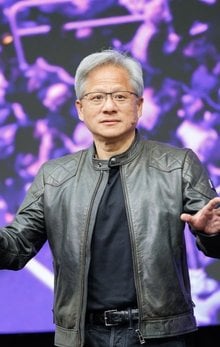
Founded in 1993, Nvidia pioneers accelerated computing, with its graphics processing units (GPUs) and CUDA software platform serving as the engine of the AI revolution.
The Santa Clara-based company holds more than 80% of the market for AI training chips and also dominates the PC gaming industry.
Its full-stack data centre solutions are now critical infrastructure, providing the computational power for data-intensive workloads that are reshaping global industries.
Company portals







Executives
Christian Klein
CEO & Member of the Executive Board

Craig Federighi
Senior Vice President Software Engineering
Jensen Huang
Founder and CEO
Lisa Su
Chair & CEO

Mark Zuckerberg
CEO

Ren Zhengfei
Founder and CEO
Satya Nadella
Chairman and CEO
Sundar Pichai
CEO
Werner Vogels
VP & CTO
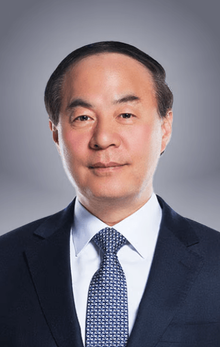
Young Hyun Jun
Vice Chairman, CEO and Head of Device Solutions (DS) Division