For years, developers have been waiting for the watershed moment in augmented and virtual reality (AR & VR) technology.
In 2025, it seems like that moment has well and truly arrived.
Rather than one form of AR or VR leading the way, though, the market has reached a kind of critical mass simply by virtue of the sheer number of forms the technology is taking.
At one end of the spectrum, we have ‘spatial computing’ devices, which are setting new standards of immersion and productivity in the world of business.
At the other end, we’re seeing a huge variety of accessible, mass-market headsets that are continuing to push boundaries to drive consumer adoption in gaming and entertainment.
Of course, AI is playing a huge role in the advancement of this technology, enhancing everything from visual renderings to intuitive controls.
While the dream of one unified metaverse still remains a distant goal — despite the best efforts of some of the companies featured here today — the technology has truly come on leaps and bounds in the past couple of years.
Today, we take a look at some of the organisations that are doing their best to move the dial on AR and VR.
10. HTC
Founded: 2015 (HTC Vive)
Based in: Taoyuan City, Taiwan
CEO: Cher Wang
Employees: ~2,174 (HTC Corporation)
Notable feature: Pioneering room-scale PC VR and leadership in modular tracking peripherals.

A foundational player from the dawn of modern consumer VR, HTC remains a vital force in the high-fidelity PC VR space.
While its headsets like the Vive Pro series face some stiff competition, HTC has carved a niche for itself by focusing on ‘prosumers’ and developers that are demanding robust, precise tracking.
Where HTC really comes into its own is in its peripheral technologies, particularly the Vive Ultimate Tracker, which provides full-body tracking for standalone headsets — a truly essential piece of VR hardware.
9. Magic Leap
Founded: 2010
Based in: Plantation, Florida, USA
CEO: Ross Rosenberg
Employees: 1,254
Notable feature: Enterprise-focused AR headset with advanced optics and spatial computing capabilities.
After a much-hyped market debut in 2018, Magic Leap has managed to solidify its place in the AR market, becoming a serious contender.
Its flagship product, the Magic Leap 2, is one of the most advanced AR headsets available today, with applications in critical sectors like healthcare, manufacturing and defence.
By providing tools for remote collaboration, complex data visualisation, and immersive training, Magic Leap is demonstrating tangible ROI for business users.
Its focus on creating a powerful, industry-specific spatial computing platform makes it a key player in driving AR’s practical, real-world usability.
8. Nvidia
Founded: 1993
Based in: Santa Clara, California, USA
CEO: Jensen Huang
Employees: 26,384
Notable feature: Dominance in GPU technology, which powers high-fidelity VR and AI-driven graphics.
While Nvidia is not a headset manufacturer, the world’s most valuable company provides the foundational bedrock upon which the entire AR and VR markets are built.
Its graphics processing units (GPUs) are the engines that power photorealistic virtual worlds on both PC VR systems and, increasingly, within cloud streaming services.
Furthermore, its Omniverse platform is a revolutionary tool for creating and simulating virtual factory floors and complex digital twins, proving indispensable for industrial metaverse applications used by companies like BMW.
The firm’s continued dominance in AI and graphics hardware makes it an absolutely essential piece of the AR and VR puzzle.
7. Niantic
Founded: 2010
Based in: San Francisco, California, USA
CEO: John Hanke
Employees: 1,047
Notable feature: Creator of Pokémon GO and the Lightship platform for building real-world AR experiences.
Niantic is the undisputed leader in mobile augmented reality, having turned Pokémon GO from a viral sensation into a cultural phenomenon that is still going strong in 2025.
With Pokémon GO, Niantic created the most successful AR game of all time, proving that AR can create compelling, location-based social experiences on the devices we already own, even if the graphics aren’t particularly sophisticated.
Beyond gaming, its Lightship platform and acquisition of 8th Wall provide developers with the essential tools to build their own WebAR and mobile AR applications.
6. Unity
Founded: 2004
Based in: San Francisco, California, USA
CEO: Matthew Bromberg
Employees: 4,987
Notable feature: A leading real-time 3D development platform used to create a vast number of AR/VR games and applications.
Unity is one of the most important software companies working in the immersive technology space today.
Its powerful and relatively accessible gaming engine is the creative tool behind a huge proportion of all VR and AR content, from blockbuster games to enterprise training simulations and architectural visualisations.
If AR and VR programs are the house, then Unity makes the bricks.
With development tools like its AR Foundation, Unity allows creators to build experiences that can be deployed across multiple platforms, including iOS, Android and all major VR headsets.
This cross-platform capability makes it an indispensable partner for developers navigating the fragmented hardware landscape.
5. Sony
Founded: 1993
Based in: San Mateo, California, USA
CEO: Hideaki Nishino
Employees: 11,000
Notable feature: The PlayStation VR2, the leading virtual reality system for games consoles.
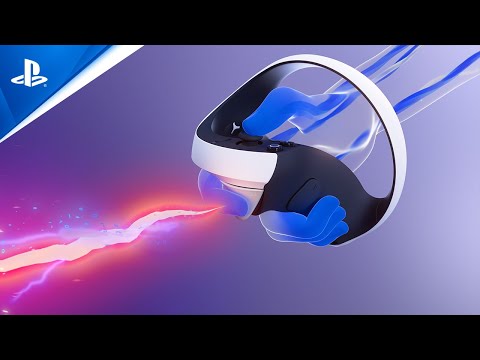
When it comes to games consoles, Sony has a real command or the VR market.
With the power of the PlayStation 5, Sony is able to give its users high-fidelity, graphically rich VR experiences that rival those on high-end PCs — all with the plug-in-and-playability of a living room console.
The company’s strength lies in its world-class software, with critically acclaimed, exclusive titles like Horizon Call of the Mountain and Astro Bot showing the unique experiences it can offer gamers.
Sony’s commitment to high-quality gaming content ensures it remains the premier destination for immersive entertainment on a dedicated home console.
4. Google
Founded: 1998
Based in: Mountain View, California, USA
CEO: Sundar Pichai
Employees: 183,000 (Alphabet Inc.)
Notable feature: The ARCore platform for Android and the development of Android XR as an open OS for headsets.
Google's influence in AR and VR is huge, even if it is not always front-and-centre.
Its ARCore software development kit is the backbone of AR on billions of Android devices, while Google Lens has familiarised millions of internet users with the power of AR through their day-to-day searches.
In VR, Google's strategy is becoming clearer all the time, with the development of Android XR, an open operating system for immersive headsets.
By positioning itself as a foundational software layer — much like it did with smartphones — Google is poised to become an important partner for hardware manufacturers looking to compete against the dominant platforms, making it a quiet giant in the space.
3. Microsoft
Founded: 1975
Based in: Redmond, Washington, USA
CEO: Satya Nadella
Employees: ~228,000
Notable feature: The HoloLens 2 headset and its comprehensive ecosystem of enterprise software.
Microsoft has conceded that it won’t be king in the consumer VR market, so it has readjusted its focus to a market where it is the undisputed champion: enterprises.
Its HoloLens 2 headset is the gold standard for industrial mixed reality, offering advanced holographic computing that transforms workflows in sectors like manufacturing, healthcare and engineering.
The hardware is powerfully supported by Microsoft's software ecosystem, including Azure Spatial Anchors and Mesh for Teams, which enable collaborative, spatially-aware applications.
By providing tangible productivity gains and solving complex business problems, Microsoft has firmly established AR/MR as an essential tool for the future of work.
2. Apple
Founded: 1976
Based in: Cupertino, California, USA
CEO: Tim Cook
Employees: 164,000
Notable feature: The Apple Vision Pro, which defines the premium “spatial computing” category.
With the launch of the Vision Pro, Apple did not just enter the market; it created a new one.
By branding its device as a “spatial computer” rather than a VR headset, Apple has defined the absolute premium end of the industry.
The hardware is, by most accounts, a technological marvel, boasting ultra-high-resolution displays and an exceptionally intuitive gesture-based operating system that seamlessly blends the real and virtual worlds.
While its high price point (US$3,499) and early-stages app ecosystem currently limit its mass-market appeal, it’s quite clear that the Vision Pro has set a new benchmark for quality and user experience that the entire industry is going to have to aspire to.
1. Meta
Founded: 2004 (as Facebook)
Based in: Redmond, Washington, USA (Reality Labs HQ)
CEO: Andrew Bosworth (CTO & Head of Reality Labs)
Employees: 17,000 (Reality Labs)
Notable feature: Unrivalled consumer market share with the Meta Quest line of headsets.

No company has done more to bring virtual reality to the masses than Meta.
Through its Reality Labs division, and with an unwavering annual investment exceeding US$16bn, Meta has achieved near-total dominance of the consumer VR market.
While the company’s pursuit of its ‘metaverse’ was initially promising, demand for the immersive reality universe has certainly tailed off. However, Meta’s developers are intent on reviving the project, revamping it with all new features.
Aside from the metaverse, Meta’s Quest headsets, particularly the best-selling Quest 2 and the mixed-reality-focused Quest 3, have come to define standalone VR technologies by offering compelling experiences at a price point that consumers are able to meet.
Now, by opening its Meta Horizon OS to third-party hardware partners like Asus and Lenovo, Meta is executing a classic platform play, aiming to become the ubiquitous "Android of VR" and ensuring its central role in the immersive future.